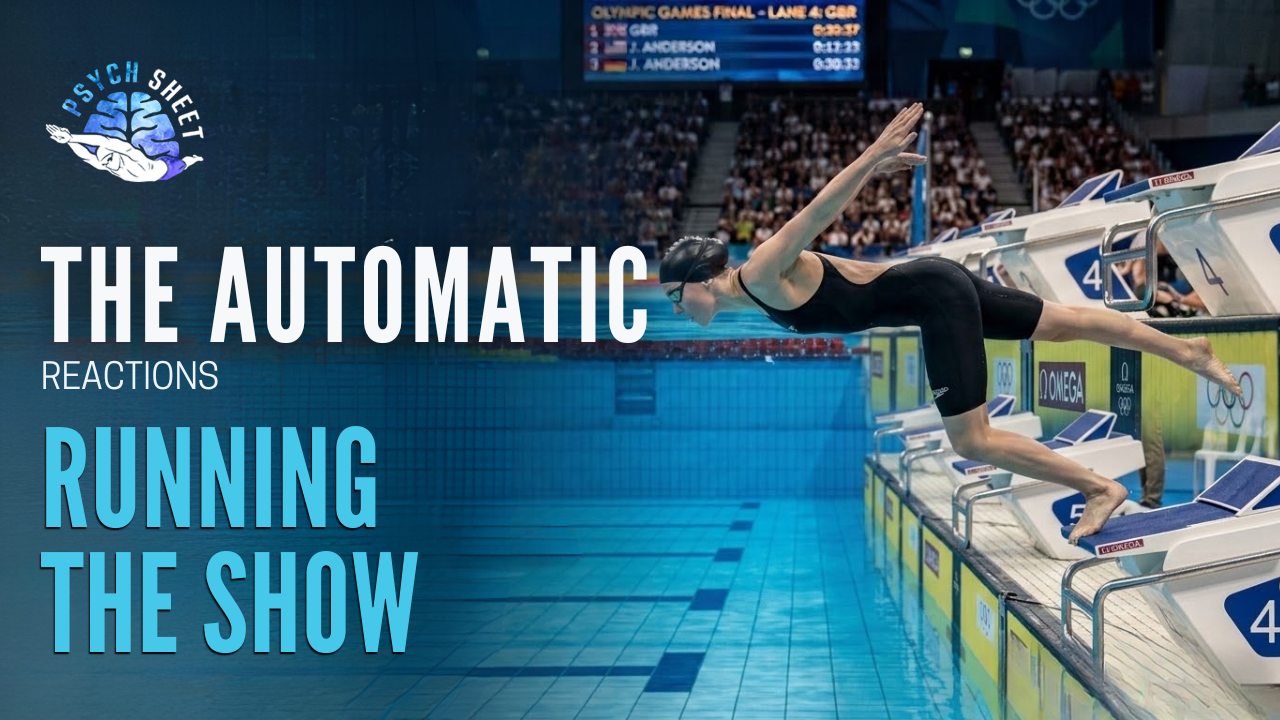

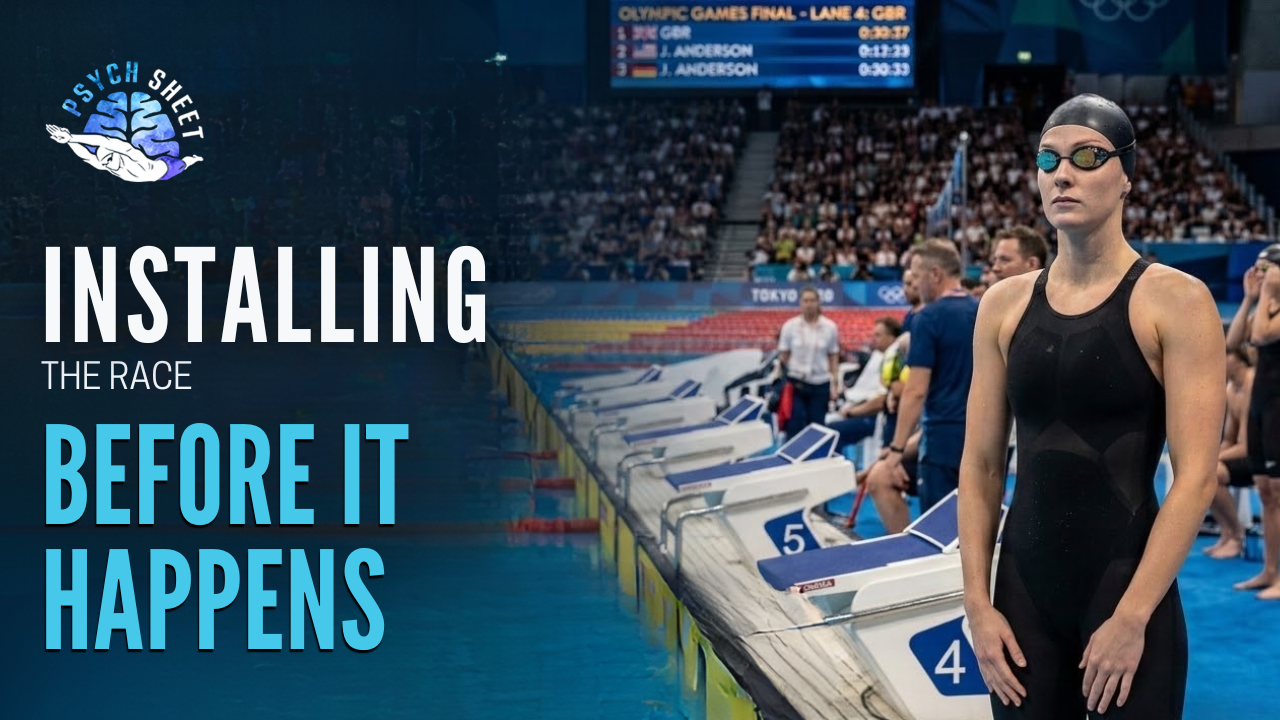
The night before a championship final, a seventeen-year-old swimmer lies in bed with her eyes closed, running through her race. Not daydreaming about winning. Not picturing a medal. She’s moving through the actual water: the exact feel of her hand entering on the first stroke, the rhythm of her breathing pattern, the specific moment she’ll start her kick into the wall.
Across town, a college swimmer does something similar before a dual meet, walking through his start, his turns, his final fifteen meters, stroke by stroke, in his mind, before he ever steps on deck.
Neither of them is simply hoping for a good race. They’re rehearsing one. This is mental rehearsal, the fifth component of the Internal Performance System, the mental infrastructure behind the Connor Elite Performance System, and it’s one of the most misunderstood tools in competitive swimming.
Mental Rehearsal Is Not the Same as Visualization
Most people have heard of visualization, and most people have a vague, slightly skeptical idea of what it means: close your eyes, picture yourself winning, and hope it helps. That version of visualization is mostly wishful thinking, and it’s not what elite performers are actually doing.
Mental rehearsal is a structured, specific process. It doesn’t involve imagining outcomes like winning or a personal best time. It involves rehearsing the exact process that produces those outcomes: the feel of a specific stroke, the timing of a specific breath, the sensation of a specific turn, run through in careful, deliberate detail. The brain doesn’t fully distinguish between a vividly rehearsed action and a physically practiced one. Structured mental rehearsal activates many of the same neural pathways involved in physically performing the movement, which is why it can genuinely reinforce a skill rather than just create a pleasant feeling beforehand.
This distinction matters enormously. Wishful visualization asks a swimmer to picture a result. Mental rehearsal asks a swimmer to install a process, stroke by stroke, breath by breath, until the body already recognizes the race before it happens.
Why the Body Believes What the Mind Rehearses
This works because of how closely mental rehearsal is tied to the other components already covered in this series. A swimmer’s nervous system responds to what feels familiar and unfamiliar. A race that has never been mentally rehearsed, only physically trained, can still register as a partially unfamiliar event when a swimmer stands behind the blocks, especially at a big meet with an unfamiliar pool or an unfamiliar level of pressure.
Detailed mental rehearsal closes that gap. By the time a well-rehearsed swimmer steps onto the blocks, her nervous system has, in a very real sense, already been there. She has already felt the water, already felt the third-turn fatigue, already felt the final push to the wall. The moment isn’t foreign anymore. It’s familiar, and familiar moments are far less likely to trigger the kind of stress response that pulls attention away from performance and toward threat.
This is also why mental rehearsal supports attention and pattern work so directly. A swimmer who has rehearsed staying focused on process, breath by breath, through a difficult third fifty is far more likely to actually do it in the race, because the pattern has already been run, just not yet in the water.
What Mental Rehearsal Actually Looks Like
Effective mental rehearsal is far more specific than most people assume, and that specificity is exactly what makes it work. A few elements tend to matter most:
Multiple senses, not just sight. The strongest mental rehearsal isn’t purely visual. It includes the feel of water resistance, the sound of the crowd, the rhythm of breath, even the taste of chlorine. The more senses involved, the more completely the brain treats the rehearsal as a real experience.
Present tense, first person. Rehearsal is most effective when it’s experienced as happening now, from inside the swimmer’s own body, rather than watched like a movie from the outside. This is one of the small details that separates genuine rehearsal from casual daydreaming.
The full range of the race, not just the good parts. A swimmer who only rehearses a perfect race hasn’t prepared for the moment things get hard. Strong mental rehearsal includes the difficult third fifty, the lactic acid, the moment of doubt, and, critically, the specific response the swimmer has trained to meet that moment with.
Consistency over intensity. A few focused minutes practiced regularly build a far stronger rehearsal habit than one long session before a big meet. Like physical training, mental rehearsal compounds with repetition.
What This Means for Coaches, Parents, and Club Leaders
For coaches, this is a tool that costs nothing but a few minutes and can be built directly into a team’s existing routine, whether that’s before practice, before a big set, or the night before a meet. Teaching athletes to rehearse process, not outcome, gives them a skill that supports everything else you’re already building on deck.
For parents, this offers a wonderful, low-pressure way to support a swimmer the night before a big race. Rather than talking about times or outcomes, asking a swimmer to walk through how the race will feel, stroke by stroke, can genuinely help settle a nervous system and prepare the body for what’s ahead.
For club leaders, this is a low-cost, high-value addition to a program’s mental performance offering. A short, structured rehearsal practice, taught consistently across an entire roster, gives every athlete access to a tool that used to be considered a hidden advantage of only the most experienced competitors.
Mental rehearsal isn’t a mystical extra. It’s one of the most concrete, learnable tools available to a swimmer, and it’s often the missing bridge between a race that’s been trained physically and a race that actually shows up the way it was trained.
Frequently Asked Questions
What is the difference between mental rehearsal and visualization?
Visualization often means loosely imagining a positive outcome, like winning. Mental rehearsal is a structured process of mentally running through the specific sensations and actions of a race, which activates neural pathways similar to physical practice and reinforces the actual skill.
Does mental rehearsal really help swimming performance?
Yes. Because the brain doesn’t fully distinguish between a vividly rehearsed movement and a physically practiced one, structured mental rehearsal can reinforce trained motor patterns and help the nervous system treat competition as familiar rather than threatening.
How should a swimmer practice mental rehearsal before a race?
Effective rehearsal is specific and multi-sensory, done in the present tense from inside the swimmer’s own experience, and includes the difficult parts of the race, not just the ideal outcome. A few consistent minutes of practice tend to be more effective than one long session right before competition.
If you’d like a structured place to start building this skill with your swimmer, our free guide In The Zone walks through practical techniques for focus, mental rehearsal, and building the kind of resilience that shows up on race day. Download it free →