
Every swim parent has wondered the same thing: if we just found the right coach or the right club, would my swimmer finally break through? It’s a natural instinct. We look to the pool deck for answers.
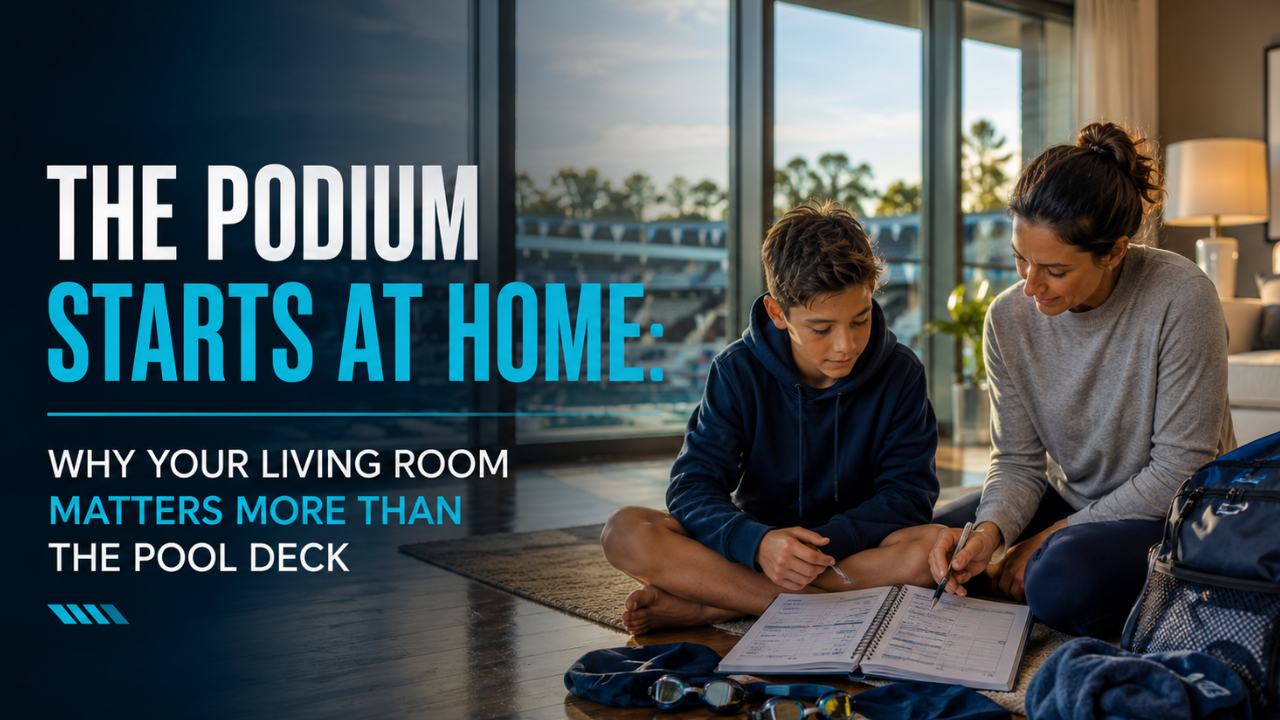
The Podium Starts at Home makes a different case. The environment a swimmer returns to after practice shapes performance as much as anything that happens during it. The podium doesn’t start on the blocks. It starts at the kitchen table, in the car ride home, in the tone a parent uses after a bad race.
Performance Follows Identity
Swimmers don’t perform well because they’re told to try harder. They perform well when they believe, at a deep level, that they are the kind of athlete who handles pressure and keeps showing up. That belief isn’t built through one pep talk. It’s built in ordinary moments at home that often have nothing to do with swimming.
“Did you win?” builds a different identity than “What did you learn today?” One narrows a child’s sense of self to outcomes they can’t control. The other builds a swimmer who sees themselves as someone always improving, regardless of the scoreboard.
The Parent as Environment
Parents aren’t coaches, and they aren’t cheerleaders. They’re the environment. A plant doesn’t grow because someone yells at it to grow faster; it grows because the soil and light around it are right. Swimmers need a stable, emotionally safe environment to return to after training, especially after a disappointing swim.
This can feel passive to parents used to giving technical feedback. But a calm, curious home does more for a swimmer’s nervous system than any stroke correction. A child who comes home to support builds a nervous system that can handle pressure. A child who comes home to interrogation builds one that associates swimming with threat.
Co-Regulation Before Conversation
After a hard race, a swimmer’s nervous system is activated. Trying to talk through splits or strategy in that moment rarely works, no matter how well-intentioned the parent is.
Co-regulation means the parent’s job right after a race isn’t to talk, it’s to be calm. A hug and a simple “I’m proud of you, let’s get some food” resets a swimmer faster than any breakdown of what went wrong. The strategy conversation can wait until the nervous system has settled.
The Internal Performance System
The book ties these ideas together in what it calls the Internal Performance System: identity, nervous system regulation, mindset, and home environment, all working together. A swimmer with strong identity but a chaotic nervous system will still struggle under pressure. A swimmer with great regulation but no clear sense of who they are as an athlete will lack direction.
What This Looks Like in Practice
- Ask about effort and growth, not just results
- Stay calm right after a race, save debriefs for later
- Watch your tone on the car ride home
- Remember that confidence is built at home, long before it’s tested at a meet
The Real Takeaway
Coaches and clubs matter, but parents have more influence than they often realize, exercised in ordinary moments rather than dramatic ones. For parents looking for the next edge, the answer might not be a new coach. It might be a slightly different version of themselves at home.